

Spiritual Gifts Continues The 4th Part “To Love Others”
Adding to the Sunday School lecture by Fidelis we discussed the 4th part of Spiritual Gifts. Remember we had read from 1 Corinthians 12:1-12. It discusses how some of us are given Gift from God through the Holy Spirit to advance The Kingdom of God and building up the Church. We use these gifts simply, cheerfully and without seeking recognition. People with these gifts find deep joy in supporting ministries, helping the poor, or funding gospel work, and they often give sacrificially beyond what seems typical. The first part of knowing your gift is to Identify Yourself know that you are a new creation, a child of God and so much more as discussed in part one. The second part is Seek the Giver First – pursue your relationship with God. The Bible says in Matthew 6:33 “ But seek ye first the kingdom of God, and his righteousness; and all these things shall be added unto you.” The Third Part of knowing your spiritual gift is to Desire or Hunger for the spiritual gift –“Pursue love, and earnestly desire the spiritual gifts, especially that you may prophesy.” 1Corinthians 14:1
And now we will discuss the Fourth Part which is Love Others. But before we begin lets start with Prayer:
Heavenly Father,
Thank You for the spiritual gifts You have poured into our lives—wisdom, kindness, service, teaching, and every grace that reflects Your Son. Stir these gifts within us, not for our own glory, but so that we may love others as Jesus loved: selflessly, patiently, and without condition. Help us to see every person as You see them, to serve without expecting return, and to forgive as we have been forgiven. May our words heal, our actions uplift, and our hearts mirror the boundless love of Christ. In His holy name we pray, Amen.
Loving other the Way Jesus Loved
Loving others the way Jesus loved is rooted in His "new commandment": "Love one another. As I have loved you, so you must love one another" (John 13:34-35). This isn't just any love—it's agape love: selfless, sacrificial, unconditional, and action-oriented, seeking the highest good of others regardless of their response or worthiness.
Jesus modeled this perfectly through humility, service, compassion, forgiveness, and ultimate sacrifice. In today's fast-paced, divided, and often self-centered world, applying this looks like intentional choices empowered by the Holy Spirit. Here's how we can live it out practically:
1. Serve humbly, even in small ways
Jesus washed His disciples' feet—a lowly servant's task—showing love through humble service (John 13). Today: Help without expecting recognition or repayment. Volunteer at a shelter, do chores for a busy neighbor, listen attentively to a coworker without interrupting, or run errands for someone elderly or ill. In a culture of hustle and self-promotion, quiet acts of service stand out.
2. Show compassion and kindness to the marginalized
Jesus reached out to outcasts: the Samaritan woman, tax collectors like Zacchaeus, lepers, children, and the sick—people society ignored or despised. He healed, fed, and empathized deeply (e.g., weeping at Lazarus' tomb). Today: Extend kindness to immigrants, the homeless, those with different political views, or people struggling with addiction/mental health. Offer a meal, a non-judgmental conversation, or practical support. In polarized times, this means crossing social, racial, or ideological divides.
3. Practice patience, forgiveness, and grace
As described in 1 Corinthians 13:4-7, love is patient and kind; it does not envy, boast, or keep record of wrongs; it bears, believes, hopes, and endures all things. Jesus forgave those crucifying Him ("Father, forgive them..."). Today: Let go of grudges in family conflicts or online arguments. Be patient in traffic, with difficult coworkers, or during disagreements. Pray for those who hurt you, and choose reconciliation over resentment. In a cancel-culture world, this radical forgiveness points people to Christ.
4. Sacrifice personally for others' good
Jesus laid down His life, saying no greater love exists than this (John 15:13). His love was self-giving, not self-seeking. Today: Prioritize others' needs—give time to mentor someone, donate resources generously, or advocate for the vulnerable (e.g., against injustice). In relationships, put your spouse's/friend's/family's well-being above your comfort.
5. Love unconditionally, including enemies
Jesus loved sinners while calling them to repentance, without condoning sin. He dined with betrayers and prayed for persecutors. Today: Respond to hostility with blessing (e.g., kindness to rude strangers or those who oppose your faith). Avoid gossip or retaliation online. This love isn't approval of wrong—but a commitment to others' ultimate good, inviting them toward truth and healing.
The key enabler: We can't manufacture this love on our own. It flows from receiving Jesus' love first (1 John 4:19: "We love because He first loved us"). Spend time in prayer, Scripture, and community to let His love fill and transform you.
When we love like this, Jesus said the world will know we are His disciples (John 13:35). In today's world of division and superficial connections, authentic Christ-like love is revolutionary—it heals, unites, and glorifies God. Start small today: Choose one person and love them as Jesus would.
AGAPE LOVE
Agape love, from the Greek word agápē, is the highest form of love described in the Bible—selfless, unconditional, sacrificial, and chosen by will rather than emotion. It seeks the good of others without expecting anything in return, even toward enemies or the undeserving. Unlike other Greek loves:
Eros: Romantic or passionate love (physical attraction and desire).
Philia: Brotherly friendship or affectionate bond (loyalty between equals).
Storge: Natural familial affection (like parent-child bonds).
Agape stands apart as divine, action-oriented love that reflects God's character (1 John 4:8).
Biblical Examples of Agape Love
The Bible overflows with illustrations, starting with God Himself.
God's love for humanity — The ultimate example: "For God so loved the world that he gave his one and only Son..." (John 3:16). This sacrificial gift came while we were still sinners (Romans 5:8).
Jesus washing the disciples' feet — On the night before His crucifixion, Jesus humbly served His followers by performing a menial task reserved for servants, teaching that true leadership is servant-hearted love (John 13:1-17).
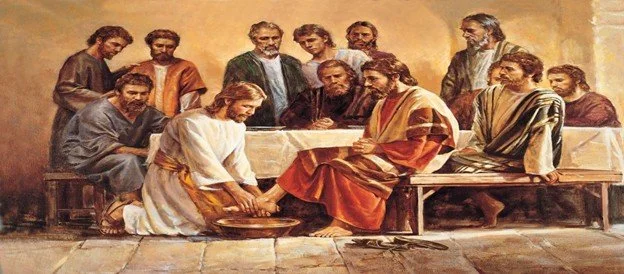
Jesus washes the feet of his disciples
The Parable of the Good Samaritan — A despised Samaritan stops to help a beaten Jewish stranger, bandaging wounds, transporting him, and paying for care—crossing ethnic hatred to show mercy (Luke 10:25-37). Jesus uses this to define "love your neighbor."

Good Samaritan helps a wounded stranger on the roadside
Jesus' forgiveness on the cross — "Father, forgive them, for they do not know what they are doing" (Luke 23:34). Even in agony, He extends grace to His executioners.
The Prodigal Son's father — The father runs to embrace his wasteful, returning son, restoring him fully without reproach (Luke 15:11-32)—a picture of God's welcoming love.
Modern Real-Life Examples
Agape isn't just ancient history; it shines in everyday and extraordinary acts today.
Mother Teresa → She dedicated her life to serving the poorest in Calcutta—lepers, orphans, the dying—treating them with dignity despite hardship, seeing Jesus in "the least of these" (Matthew 25:40).

bbc.co.uk Mother Theresa
2. Forgiving the unforgivable → Families of victims forgiving murderers (e.g., Amish community after school shooting, or parents forgiving drivers in accidents)—choosing reconciliation over hatred.
3. Most recently Erika Kirk- Forgiving the man who murdered her husband Charlie in cold blood, in front of thousands of witnesses, in the eyes of children who will forever have that image on their memories. An act of pure love for God over hatred.

facebook.com Agape Love
Agape love requires compassion and self sacrifice
Everyday acts → Paying for a stranger's meal anonymously, volunteering at shelters without recognition, adopting children in need, or caregivers sacrificing for elderly parents/spouses with dementia—putting others' well-being first.
Agape love transforms lives because it's empowered by the Holy Spirit (Romans 5:5). It's not natural to humans but becomes possible as we abide in Christ's love (John 15:9-13). Which example resonates most with you, or where might you practice it today?
Think about the type of love you have in your life, Imagine what it would feel like to have the ultimate love, Agape love. A feeling like no other. The type of love that no human can hurt you with, no human can take from you, no human can make you cry. The love that runs so deep that it is yours and God’s. God protects you and you protect your God. Nothing can change that, pure Joy, pure happiness, pure Love. You can have that with Jesus. He calls on you everyday, every moment. He just wants you to come home and call on him. He just wants you to invite him into your heart and share that true agape love. God Bless.