

Judges Chapters 16-18
Opening Prayer
Heavenly Father,
As we open Your Word today and step into the final chapters of the Book of Judges, we come with humble hearts. These chapters show us the darkness that falls when a people turn away from You — when every man does what is right in his own eyes.
Lord, we see in Samson both great strength and tragic weakness. We see a nation sliding deeper into moral chaos, idolatry, and self-destruction. In the stories of Micah, the Levite, and the tribe of Dan, we witness how quickly Your people can replace true worship with convenient religion.
Help us, Father, not to read these chapters with judgment alone, but with self-examination. Reveal to us any areas in our own lives where we have compromised Your truth, followed our own desires, or created “gods” of our own making. Teach us the high cost of living without a king — and the even greater danger of refusing to let You be our King.
Open our eyes to see Your sovereignty even in the midst of human failure. Remind us that even in our weakness and rebellion, Your purposes ultimately prevail. Prepare our hearts now to learn from Israel’s mistakes so that we might walk more faithfully with You.
We ask this in the strong name of Jesus Christ, our true King and Savior.
Amen.
Looking Back
In the Book of Judges, chapters 13–15 introduce Samson, a judge raised up by God to deliver Israel from the oppression of the Philistines. An angel of the Lord appeared to Samson’s barren mother, announcing that she would bear a son who was to be a Nazirite from birth — set apart with a special vow that included never cutting his hair. Samson grew up with extraordinary strength from the Spirit of the Lord, but he repeatedly pursued his own desires, including marrying a Philistine woman against his parents’ wishes. This led to conflicts involving riddles, betrayal by his wife, the burning of Philistine fields, and violent retaliation, all while Samson began to act as a deliverer for Israel through his mighty feats against their enemies.
As we move into Judges 16–18, Samson’s story reaches its dramatic and tragic conclusion with his relationship with Delilah, his capture, blinding, and final act of strength in the temple of Dagon. These chapters then shift focus to the deepening moral and spiritual chaos in Israel, describing the idolatry of Micah, the theft of a Levite, and the violent migration of the tribe of Dan — vividly illustrating the repeated theme that “in those days there was no king in Israel; everyone did what was right in his own eyes.”
Scripture NKJV
Judges 16
Samson and Delilah
1 Now Samson went to Gaza and saw a harlot there, and went in to her. 2 When the Gazites weretold, “Samson has come here!” they surrounded theplace and lay in wait for him all night at the gate of the city. They were quiet all night, saying, “In the morning, when it is daylight, we will kill him.” 3 And Samson lay low till midnight; then he arose at midnight, took hold of the doors of the gate of the city and the two gateposts, pulled them up, bar and all, put them on his shoulders, and carried them to the top of the hill that faces Hebron.
4 Afterward it happened that he loved a woman in the Valley of Sorek, whose name was Delilah. 5 And the lords of the Philistines came up to her and said to her, “Entice him, and find out where his great strength lies, and by what means we may overpower him, that we may bind him to afflict him; and every one of us will give you eleven hundred pieces of silver.”
6 So Delilah said to Samson, “Please tell me where your great strength lies, and with what you may be bound to afflict you.”
7 And Samson said to her, “If they bind me with seven fresh bowstrings, not yet dried, then I shall become weak, and be like any other man.”
8 So the lords of the Philistines brought up to her seven fresh bowstrings, not yet dried, and she bound him with them. 9 Now menwere lying in wait, staying with her in the room. And she said to him, “The Philistines are upon you, Samson!” But he broke the bowstrings as a strand of yarn breaks when it touches fire. So the secret of his strength was not known.
10 Then Delilah said to Samson, “Look, you have mocked me and told me lies. Now, please tell me what you may be bound with.”
11 So he said to her, “If they bind me securely with new ropes that have never been used, then I shall become weak, and be like any other man.”
12 Therefore Delilah took new ropes and bound him with them, and said to him, “The Philistines are upon you, Samson!” And menwere lying in wait, staying in the room. But he broke them off his arms like a thread.
13 Delilah said to Samson, “Until now you have mocked me and told me lies. Tell me what you may be bound with.”
And he said to her, “If you weave the seven locks of my head into the web of the loom”—
14 So she wove it tightly with the batten of the loom, and said to him, “The Philistines are upon you, Samson!” But he awoke from his sleep, and pulled out the batten and the web from the loom.
15 Then she said to him, “How can you say, ‘I love you,’ when your heart is not with me? You have mocked me these three times, and have not told me where your great strength lies.” 16 And it came to pass, when she pestered him daily with her words and pressed him, so that his soul was vexed to death, 17 that he told her all his heart, and said to her, “No razor has ever come upon my head, for I havebeen a Nazirite to God from my mother’s womb. If I am shaven, then my strength will leave me, and I shall become weak, and be like any other man.”
18 When Delilah saw that he had told her all his heart, she sent and called for the lords of the Philistines, saying, “Come up once more, for he has told me all his heart.” So the lords of the Philistines came up to her and brought the money in their hand. 19 Then she lulled him to sleep on her knees, and called for a man and had him shave off the seven locks of his head. Then she began to torment him, and his strength left him. 20 And she said, “The Philistines are upon you, Samson!” So he awoke from his sleep, and said, “I will go out as before, at other times, and shake myself free!” But he did not know that the Lord had departed from him.
21 Then the Philistines took him and put out his eyes, and brought him down to Gaza. They bound him with bronze fetters, and he became a grinder in the prison. 22 However, the hair of his head began to grow again after it had been shaven.
Samson Dies with the Philistines
23 Now the lords of the Philistines gathered together to offer a great sacrifice to Dagon their god, and to rejoice. And they said:
“Our god has delivered into our hands
Samson our enemy!”
24 When the people saw him, they praised their god; for they said:
“Our god has delivered into our hands our enemy,
The destroyer of our land,
And the one who multiplied our dead.”
25 So it happened, when their hearts were merry, that they said, “Call for Samson, that he may perform for us.” So they called for Samson from the prison, and he performed for them. And they stationed him between the pillars. 26 Then Samson said to the lad who held him by the hand, “Let me feel the pillars which support the temple, so that I can lean on them.” 27 Now the temple was full of men and women. All the lords of the Philistines were there—about three thousand men and women on the roof watching while Samson performed.
28 Then Samson called to the Lord, saying, “O Lord God, remember me, I pray! Strengthen me, I pray, just this once, O God, that I may with one blow take vengeance on the Philistines for my two eyes!” 29 And Samson took hold of the two middle pillars which supported the temple, and he braced himself against them, one on his right and the other on his left. 30 Then Samson said, “Let me die with the Philistines!” And he pushed with allhis might, and the temple fell on the lords and all the people who were in it. So the dead that he killed at his death were more than he had killed in his life.
31 And his brothers and all his father’s household came down and took him, and brought him up and buried him between Zorah and Eshtaol in the tomb of his father Manoah. He had judged Israel twenty years.
Judges 17
Micah’s Idolatry
1 Now there was a man from the mountains of Ephraim, whose name was Micah. 2 And he said to his mother, “The eleven hundred shekels of silver that were taken from you, and on which you put a curse, even saying it in my ears—here is the silver with me; I took it.”
And his mother said, “Mayyoube blessed by the Lord, my son!” 3 So when he had returned the eleven hundred shekels of silver to his mother, his mother said, “I had wholly dedicated the silver from my hand to the Lord for my son, to make a carved image and a molded image; now therefore, I will return it to you.” 4 Thus he returned the silver to his mother. Then his mother took two hundred shekels of silver and gave them to the silversmith, and he made it into a carved image and a molded image; and they were in the house of Micah.
5 The man Micah had a shrine, and made an ephod and household idols; and he consecrated one of his sons, who became his priest. 6 In those days therewas no king in Israel; everyone did whatwas right in his own eyes.
7 Now there was a young man from Bethlehem in Judah, of the family of Judah; he was a Levite, and was staying there. 8 The man departed from the city of Bethlehem in Judah to stay wherever he could find aplace. Then he came to the mountains of Ephraim, to the house of Micah, as he journeyed. 9 And Micah said to him, “Where do you come from?”
So he said to him, “I am a Levite from Bethlehem in Judah, and I am on my way to find aplace to stay.”
10 Micah said to him, “Dwell with me, and be a father and a priest to me, and I will give you ten shekels of silver per year, a suit of clothes, and your sustenance.” So the Levite went in. 11 Then the Levite was content to dwell with the man; and the young man became like one of his sons to him. 12 So Micah consecrated the Levite, and the young man became his priest, and lived in the house of Micah. 13 Then Micah said, “Now I know that the Lord will be good to me, since I have a Levite as priest!”
Judges 18
The Danites Adopt Micah’s Idolatry
1 In those days therewas no king in Israel. And in those days the tribe of the Danites was seeking an inheritance for itself to dwell in; for until that day their inheritance among the tribes of Israel had not fallen to them. 2 So the children of Dan sent five men of their family from their territory, men of valor from Zorah and Eshtaol, to spy out the land and search it. They said to them, “Go, search the land.” So they went to the mountains of Ephraim, to the house of Micah, and lodged there. 3 While they were at the house of Micah, they recognized the voice of the young Levite. They turned aside and said to him, “Who brought you here? What are you doing in this place? What do you have here?”
4 He said to them, “Thus and so Micah did for me. He has hired me, and I have become his priest.”
5 So they said to him, “Please inquire of God, that we may know whether the journey on which we go will be prosperous.”
6 And the priest said to them, “Go in peace. The presence of the Lord be with you on your way.”
7 So the five men departed and went to Laish. They saw the people who were there, how they dwelt safely, in the manner of the Sidonians, quiet and secure. Therewere no rulers in the land who might put them to shame for anything. They were far from the Sidonians, and they had no ties with anyone.
8 Then thespies came back to their brethren at Zorah and Eshtaol, and their brethren said to them, “What is your report?”
9 So they said, “Arise, let us go up against them. For we have seen the land, and indeed it is very good. Would you do nothing? Do not hesitate to go, and enter to possess the land. 10When you go, you will come to a secure people and a large land. For God has given it into your hands, a place where thereis no lack of anything that is on the earth.”
11 And six hundred men of the family of the Danites went from there, from Zorah and Eshtaol, armed with weapons of war. 12 Then they went up and encamped in Kirjath Jearim in Judah. (Therefore they call that place Mahaneh Dan to this day. There itis, west of Kirjath Jearim.) 13 And they passed from there to the mountains of Ephraim, and came to the house of Micah.
14 Then the five men who had gone to spy out the country of Laish answered and said to their brethren, “Do you know that there are in these houses an ephod, household idols, a carved image, and a molded image? Now therefore, consider what you should do.” 15 So they turned aside there, and came to the house of the young Levite man—to the house of Micah—and greeted him. 16 The six hundred men armed with their weapons of war, who were of the children of Dan, stood by the entrance of the gate. 17 Then the five men who had gone to spy out the land went up. Entering there, they took the carved image, the ephod, the household idols, and the molded image. The priest stood at the entrance of the gate with the six hundred men whowere armed with weapons of war.
18 When these went into Micah’s house and took the carved image, the ephod, the household idols, and the molded image, the priest said to them, “What are you doing?”
19 And they said to him, “Be quiet, put your hand over your mouth, and come with us; be a father and a priest to us. Isit better for you to be a priest to the household of one man, or that you be a priest to a tribe and a family in Israel?” 20 So the priest’s heart was glad; and he took the ephod, the household idols, and the carved image, and took his place among the people.
21 Then they turned and departed, and put the little ones, the livestock, and the goods in front of them. 22 When they were a good way from the house of Micah, the men who were in the houses near Micah’s house gathered together and overtook the children of Dan. 23 And they called out to the children of Dan. So they turned around and said to Micah, “What ails you, that you have gathered such a company?”
24 So he said, “You have taken away my gods which I made, and the priest, and you have gone away. Now what more do I have? How can you say to me, ‘What ails you?’ ”
25 And the children of Dan said to him, “Do not let your voice be heard among us, lest angry men fall upon you, and you lose your life, with the lives of your household!” 26 Then the children of Dan went their way. And when Micah saw that they were too strong for him, he turned and went back to his house.
Danites Settle in Laish
27 So they took thethings Micah had made, and the priest who had belonged to him, and went to Laish, to a people quiet and secure; and they struck them with the edge of the sword and burned the city with fire. 28 Therewas no deliverer, because it was far from Sidon, and they had no ties with anyone. It was in the valley that belongs to Beth Rehob. So they rebuilt the city and dwelt there. 29 And they called the name of the city Dan, after the name of Dan their father, who was born to Israel. However, the name of the city formerly was Laish.
30 Then the children of Dan set up for themselves the carved image; and Jonathan the son of Gershom, the son of Manasseh, and his sons were priests to the tribe of Dan until the day of the captivity of the land. 31 So they set up for themselves Micah’s carved image which he made, all the time that the house of God was in Shiloh.
What does it mean?
Judges 16–18 forms a powerful and sobering conclusion to the main section on the judges (with Samson) and transitions into the book's darker "appendix" section. These chapters illustrate the deepening spiritual and moral decline of Israel during a time when "there was no king in Israel; everyone did what was right in his own eyes" (repeated in Judges 17:6 and 18:1).
Summary of Events
In Judges 16, Samson's story reaches its tragic climax. After a pattern of pursuing his own desires (including relationships with Philistine women), he falls in love with Delilah. The Philistine lords bribe her to discover the secret of his strength. Despite three deceptions, Samson eventually reveals the truth: his strength comes from his Nazirite vow to God, symbolized by his uncut hair. Delilah betrays him; his hair is shaved while he sleeps, the Spirit of the Lord departs, and the Philistines capture, blind, and imprison him. In a final act of repentance and prayer, God restores his strength one last time. Samson collapses the pillars of Dagon's temple during a Philistine celebration, killing more enemies in his death than he did in his life.
Judges 17–18 then shifts to a separate but related story highlighting widespread idolatry and chaos. A man named Micah steals silver from his mother, then uses part of it to make an idol (along with an ephod and household gods). He sets up a private shrine in his home, first consecrating one of his sons as priest and later hiring a wandering Levite for the role, believing this will bring God's blessing. Meanwhile, the tribe of Dan—still without a settled inheritance—sends spies who discover Micah's setup. On their way to conquer the peaceful city of Laish (which they later rename Dan), the Danites steal Micah's idols, ephod, and priest (a descendant of Moses). They establish their own idolatrous worship center in the north, which persists for generations. The narrative underscores lawlessness, theft, violence, and the creation of convenient, self-made religion.
Overall Meaning of Judges 16–18
These chapters paint a grim picture of spiritual decline when God's people reject His authority and live by their own standards. Samson embodies personal compromise: gifted by God yet repeatedly weakened by lust, pride, and disobedience to his Nazirite calling. His story shows how even a divinely empowered leader can waste tremendous potential through unfaithfulness. The Micah and Danite account escalates this to a societal level—syncretism (mixing true worship with idols), theft of sacred things, and the normalization of "DIY religion." The repeated refrain ("everyone did what was right in his own eyes") diagnoses the root problem: the absence of godly kingship and covenant obedience, leading to anarchy, idolatry, and moral chaos. Yet even here, God's sovereignty shines through—He can still accomplish His purposes (like weakening the Philistines through Samson) despite human failure.
The text does not endorse these behaviors; it exposes them as warnings, showing the high cost of turning from God's clear commands in the Torah.
What God Teaches Us Today
Judges 16–18 offers several timeless, personal lessons through the Holy Spirit's conviction and application:
The danger of compromise and misplaced affections: Samson teaches that sin (especially sexual or relational idolatry) can gradually erode our spiritual strength and testimony. What starts as "small" compromises can lead to devastating blindness—both literal and spiritual. We must guard our hearts and not underestimate the pull of temptation.
True strength comes from faithfulness to God, not self-reliance: Samson's power was never in his muscles or hair but in his separation unto the Lord. When he profaned his vow, the Spirit departed. This reminds us that any "strength" or gifting we have is sustained only by ongoing dependence on God and obedience to His Word.
The futility and danger of self-made religion: Micah and the Danites show how easy it is to create a comfortable faith that looks "spiritual" (using a Levite, invoking the Lord's name) but ignores God's revealed will. God is not pleased with worship we invent to suit ourselves; He calls us to worship Him on His terms, with pure hearts. Personalized faith often leads to greater sin and long-term consequences for families and communities.
The need for a true King: These chapters highlight humanity's failure under self-rule and point forward to the ultimate need for Jesus Christ—the perfect King who fulfills what flawed judges like Samson could not. In Christ, we find forgiveness for our compromises, true strength through the Holy Spirit, and pure worship.
God's mercy and sovereignty amid failure: Even in rebellion and rock-bottom moments (Samson's imprisonment and prayer), God can hear, restore, and use imperfect people for His glory. However, this grace does not excuse ongoing disobedience—faith and faithfulness are not the same. The stories encourage honest self-examination: Are we living as if we have no King, or submitting fully to Jesus?
In short, God uses Judges 16–18 as a mirror: it warns against the slow drift into idolatry and self-rule while calling us to wholehearted devotion, covenant faithfulness, and reliance on Christ's kingship. It invites us to repent where we've compromised and to pursue worship and obedience that honors God alone.
Further explanation of Micah
What Literally Happens in These Verses
Micah steals from his mother (v. 1-2): Micah, a man living in the hill country of Ephraim (central Israel), stole 1,100 shekels of silver from his mother. This was an enormous sum — roughly a fortune in that era. For comparison, later in the story (Judges 17:10) we learn that 10 shekels per year was considered adequate pay for a priest. So 1,100 shekels represented many years’ wages or a very large inheritance.
His mother had publicly pronounced a curse on the thief (and apparently spoke it loudly enough that Micah overheard it). Fear of that curse (and perhaps fear of its spiritual consequences) prompted Micah to confess: “Here is the silver with me; I took it.”
The mother’s surprising response (v. 2): Instead of anger or punishment, she immediately blesses him: “May you be blessed by the Lord, my son!” This shows a strange mix of superstition and family loyalty. The curse is instantly reversed into a blessing once the money returns.
The mother “dedicates” the silver (v. 3): She declares that she had “wholly dedicated” the entire 1,100 shekels to the Lord specifically so her son could use it to make a carved image (Hebrew: pesel — a sculpted or graven idol) and a molded image (Hebrew: massekah — a cast or molten metal idol). Then she gives the silver back to Micah for this purpose.
Only a fraction is actually used (v. 4): The mother takes only 200 shekels (less than 20% of the total) and gives it to a silversmith, who fashions the carved and molded images. These idols are then placed in the house of Micah. The rest of the silver is apparently kept by the family.
Why This Is So Significant — The Deeper Meaning
This short scene is a shocking snapshot of the spiritual and moral chaos in Israel during the time of the Judges. Several layers stand out:
Blatant Violation of God’s Clear Commands The exact phrase “carved image and molded image” directly echoes the language God used when forbidding idolatry (see Exodus 20:4-5 and especially Deuteronomy 27:15, which pronounces a curse on anyone who makes such an image). Making any physical representation of God — even if they intended it to represent Yahweh (the Lord) — was strictly prohibited. The Israelites had seen no form when God spoke to them at Sinai (Deuteronomy 4:15-16), precisely to prevent this kind of thing. Yet here, a mother and son openly plan to create idols while still invoking the name of the Lord.
Syncretism — Mixing True Faith with False Worship Notice how religious-sounding their words are:
They use the covenant name “the Lord” (Yahweh).
The mother “dedicates” the silver to the Lord.
She blesses her son in the Lord’s name.
They are not abandoning Yahweh outright. Instead, they are trying to worship Him on their own terms — creating a convenient, homemade version of religion that includes idols. This is classic syncretism: blending elements of true faith with pagan practices. It shows they knew something about the Lord, but they ignored or twisted His commands to suit their desires.
Family Dysfunction and the Love of Money The story begins with theft within the family and a mother who was so attached to her money that she cursed the thief (possibly suspecting her own son). Once the money returns, she quickly repurposes it into something “spiritual.” This reveals how the love of money and material security can corrupt even family relationships and religious devotion. The silver had become almost an idol before it was shaped into one.
Hypocrisy and Half-Hearted “Dedication” The mother claims to dedicate all 1,100 shekels to the Lord for making the idols, yet she only uses 200. This suggests the “dedication” was more of a superstitious or manipulative vow than genuine obedience. It’s religion used as a tool to try to control God or secure blessing, rather than humble submission to Him.
Illustration of the Book’s Main Theme Judges 17:6 (right after this passage) states: “In those days there was no king in Israel; everyone did what was right in his own eyes.” These four verses are a perfect example of that verse in action. Micah and his mother are not following God’s revealed law (the Torah). They are inventing their own religious system that feels right to them — complete with a private shrine, idols, and later their own priest (v. 5).
What God Teaches Us Through This Passage
God cannot be manipulated or reshaped to fit our preferences. Attempting to worship the true God with images, rituals, or practices He has forbidden is still idolatry, even if we use His name and claim good intentions.
Compromise starts small but leads to greater darkness. What begins with family theft and a superstitious curse quickly escalates into full-blown household idolatry, a private shrine, and eventually influences an entire tribe (as seen in Judges 18).
Outward religious language does not equal true obedience. Micah’s family talks about the Lord, blessings, and dedication — but their actions directly contradict God’s Word. This warns us to examine whether our faith is shaped by Scripture or by our own ideas of what feels spiritual.
The danger of “DIY religion.” When people reject God’s authority and kingship, they create comfortable versions of faith that ultimately cannot deliver real blessing or protection.
In the broader context of Judges 16–18, this story follows Samson’s tragic compromise and shows that the problem wasn’t limited to one flawed leader. The entire nation was sliding into moral and spiritual anarchy. Even “ordinary” families were doing what was right in their own eyes.
Why the Levite priest accepted Micah’s offer?
The young Levite (later identified in Judges 18:30 as Jonathan, a grandson of Moses) agreed to live with Micah for very practical and self-serving reasons, which the text makes clear through his situation and actions.
His Background and Situation
This Levite was from the priestly tribe of Levi but had been sojourning (living temporarily as a stranger) in Bethlehem in Judah, which was not one of the designated Levitical cities assigned by God (see Joshua 21 and Numbers 35). He had no settled inheritance or permanent role at the central sanctuary (the tabernacle). Instead, he was wandering and explicitly looking “to sojourn where he could find a place” (Judges 17:8-9). He was essentially unemployed or underemployed in his God-given calling, drifting in search of security and provision.
Micah’s Offer
When the Levite arrived at Micah’s house in the hill country of Ephraim, Micah saw an opportunity to “upgrade” his homemade shrine. He already had idols, an ephod, and household gods, and had first appointed one of his own sons as priest. Now he offered the Levite a full package:
Live with me and be my “father” (an honorific title for a spiritual advisor or revered leader) and priest.
Annual salary: 10 shekels of silver (a modest but steady income — for context, this was roughly a year’s support in that era).
A suit of clothes (or change of apparel).
Food and lodging (“your sustenance” or “victuals”).
Micah basically offered him a comfortable, stable home with room, board, clothing, and regular pay to serve as the family’s private chaplain over a personal idolatrous shrine.
Why the Levite Agreed
The text states plainly: “So the Levite went in. Then the Levite was content to dwell with the man; and the young man became like one of his sons to him” (Judges 17:10-11). He accepted immediately and settled in happily.
The main reasons were:
Financial and material security — He was a wanderer without a stable place or income. Micah’s offer gave him a reliable job, housing, food, and clothing — far better than continuing to drift.
Comfort and belonging — He was treated like a member of the family (“like one of his sons”), which provided emotional and social stability.
Opportunity to function as a priest — Even though it was in an illegitimate, idolatrous setup, it allowed him to exercise (or appear to exercise) his Levitical role, which he may have desired.
He made no objection to the idolatry, the carved/molten images, or the fact that this violated God’s law for worship and priesthood. As a Levite, he should have known better — the Torah clearly forbade such private shrines, idols, and unauthorized worship. Yet he compromised for personal gain. Commentaries often describe him as an opportunist or “hireling” who prioritized comfort and provision over faithfulness to God’s commands.
Broader Context in Judges 16–18
This decision fits the book’s theme: “In those days there was no king in Israel; everyone did what was right in his own eyes” (Judges 17:6). The Levite, like Micah and his mother, followed his own desires rather than God’s revealed will. His compromise started small (leaving his proper sphere) but led to greater sin — he later allowed the Danites to steal the idols and priestly items and went with them to establish an idolatrous worship center in Dan (Judges 18).
What This Teaches Us
God uses this story to warn against compromising our calling for material comfort, security, or convenience. The Levite had a God-given role and identity as a Levite, but he traded faithfulness for an easy situation. It shows how easily even those set apart for God’s service can drift into self-serving religion when there is no strong commitment to obedience and no central godly authority.
In today’s terms, it challenges us: Are we tempted to “hire out” our gifts, time, or convictions for personal benefit, even if it means participating in something that doesn’t fully align with God’s Word? Or do we prioritize stability and belonging over faithfulness?
In closing
As we close our time in Judges 16–18, we have witnessed the tragic downward spiral of a nation that refused to honor God as King. Samson’s mighty strength was wasted through compromise and lust, ending in blindness and death. Micah and his mother turned stolen silver into household idols while still speaking the name of the Lord. A Levite sold his ministry for comfort and status, and the tribe of Dan stole what was not theirs to establish their own center of false worship.
In these chapters we see the repeated refrain fulfilled with painful clarity: “In those days there was no king in Israel; everyone did what was right in his own eyes.” The result was moral chaos, idolatry, theft, violence, and spiritual darkness.
Yet even in this dark portrait, God is teaching us. He warns us that when we live by our own desires instead of His Word, we create gods in our own image and slowly destroy what He meant for good. He reminds us that true strength, true worship, and true security come only from wholehearted obedience and submission to Him as King.
The message of Judges 16–18 is both sobering and hopeful. It shows us our desperate need for a righteous King — a need ultimately fulfilled in Jesus Christ, who never compromised, who perfectly obeyed, and who now reigns forever.
Dear friends,
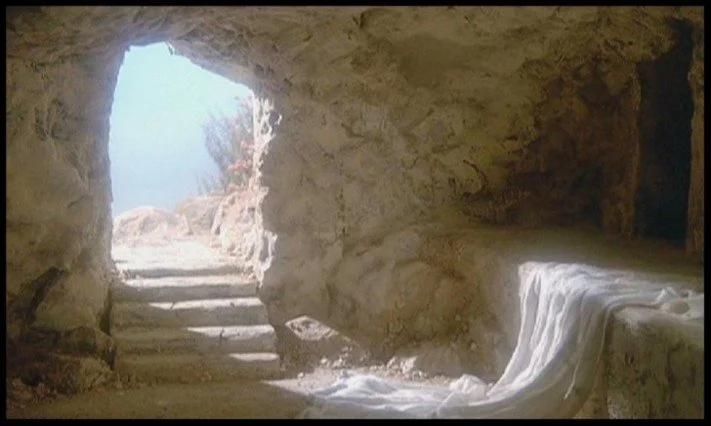
This Easter Sunday, as we finish our journey through the dark and sobering chapters of Judges 16–18, my heart overflows with gratitude for the hope we have in Jesus Christ.
We have seen the tragic cost of living without a king — compromise that led to blindness, idolatry that replaced true worship, and self-rule that brought chaos and heartbreak. Samson’s final cry for strength, the empty shrine of Micah, and the stolen gods of Dan all remind us how desperately we need a righteous King who will not fail us.
That is why Easter changes everything.
On this glorious Resurrection Sunday, we celebrate that Jesus — the perfect King — did what no judge, no Levite, and no human effort could ever do. He lived in perfect obedience, laid down His life for our compromises and sins, and rose victorious from the grave. Death could not hold Him. Idols have no power over Him. And because He lives, we are no longer slaves to “doing what is right in our own eyes.” We can live under His loving rule, forgiven, restored, and filled with the same Spirit that raised Him from the dead.
This Easter, may the resurrection of Jesus fill your heart with fresh hope and joy. Let it remind you that no matter how dark the story has been — in Judges or in your own life — the tomb is empty, the King has risen, and new life is available today.
May you walk in the power of His resurrection, worship Him alone with undivided hearts, and live as people who belong to the risen King.
He is risen! He is risen indeed!
With love and joy in Christ,
Special thanks are given to Jesus Christ, my Lord and Savior, for the gift of writing and the privilege of sharing this Bible Study. His guidance and blessings have made this work possible, and it is with a grateful heart that can share my study with you. I hope you find it informational and helpful in your spiritual journey. I am asking that you open your hearts and minds to accept the word of Christ into your hearts and accept His word to transform your life in positive ways. This is the first part of my online Christian Bookstore Fellowship and I do accept donations that will further my mission to have a Bookstore in our community, a place where we can sit down face to face and enjoy this Bible Study over open and honest conversation. I will continue this online Study as well to complete the entire year. Thank you for following The Mustard Seed Christian Bookstore Fellowship & Café online Bible Study.
This Bible study is written with inspiration and wisdom from the Holy Spirit, Scripture from the Holy Bible (NIV), NKJV Life Application Study Bible, analytical support and help in organizing and presentation from Grok AI and writing assistance with drafting and editing from Microsoft Co-Pilot.